

Foodservice Equipment Repair and Maintenance Service Company of the Year - 2024
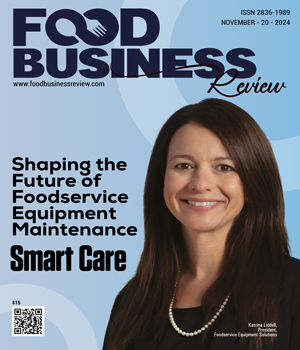
Food Service Equipment - 2024
Nominate a Company
Usually, the qualified subscribers of our magazine nominate companies with whom they have collaborated and experienced exceptional results to be in this list. Did a company you recently worked with give you stellar results and ROI? Did it turn out to be one you would wholeheartedly recommend to peers? Or do you know of such an outstanding company through your network? Please fill in the details below and nominate them to be featured here.

Foodservice Equipment Repair and Maintenance Service Company of the Year

Smart Care is carving a unique niche in the highly competitive foodservice equipment repair and maintenance industry. The company has embraced a customer-first mentality, building a reputation for reliability, speed, and innovation. ... read full profile
Food Service Equipment Info
Q1
What Do Top Food Service Equipment Manufacturers Provide to Commercial Kitchens?
Top Food Service Equipment Manufacturers design and produce the core infrastructure used in commercial kitchens, including cooking ranges, refrigeration units, dishwashing systems, prep stations and ventilation equipment. Their role extends beyond fabrication into compliance with food safety standards, energy efficiency requirements and durability under continuous use. In practice, equipment must withstand heat cycles, cleaning chemicals and long operating hours. A poorly built unit can fail mid-service, disrupting operations and increasing repair costs.
Q2
Why Does the Food Service Equipment Market Continue to Grow?
Demand for Top Food Service Equipment Manufacturers is tied to expansion in hospitality, cloud kitchens and institutional food services. Restaurants are under pressure to improve throughput while controlling labor and energy costs. Equipment upgrades often replace manual processes with automated or semi-automated systems. Growth is also driven by stricter hygiene regulations and the need for traceable food handling processes. Kitchens are being redesigned for speed and consistency, not just capacity, which increases reliance on specialized equipment vendors.
Q3
How Should Buyers Evaluate Food Service Equipment Manufacturers?
Evaluation starts with fit for the intended kitchen environment rather than brand recognition. Buyers should examine load capacity, recovery times for heating or cooling, ease of cleaning and compatibility with existing layouts. A practical test is to review how the equipment performs during peak hours, not in showroom conditions. Maintenance access matters. If key components are difficult to reach, downtime increases. Buyers should also verify parts availability and service response times, since equipment failure during service hours has immediate financial impact.
Q4
What Business Value Do Top Food Service Equipment Manufacturers Deliver?
Top Food Service Equipment Manufacturers influence cost structure more than many buyers expect. Efficient refrigeration reduces energy bills. Faster cooking equipment shortens service cycles and increases table turnover. Consistent heat control reduces food waste. Over time, these factors affect margins. The value is not just in purchase price but in lifecycle cost, including repairs, energy use and replacement frequency. A unit that lasts longer with fewer breakdowns offsets higher upfront cost.
Q5
How Are Technology and Design Changing Commercial Kitchen Equipment?
Manufacturers are integrating digital controls, sensors and remote monitoring into equipment. This allows kitchen managers to track temperature consistency, energy usage and maintenance needs in real time. Some systems alert staff before a failure occurs. Design changes also focus on modular setups, allowing kitchens to reconfigure layouts as menus evolve. Space constraints in urban kitchens have pushed compact, multi-function equipment. The shift is incremental but practical. Most kitchens still prioritize reliability over experimental features.
Q6
What Should Buyers Prioritize When Comparing Top Food Service Equipment Manufacturers?
Buyers comparing Top Food Service Equipment Manufacturers should focus on durability, service support and real-world performance under load. Warranty terms matter, but response time for repairs often matters more. Equipment should align with kitchen workflow, not force staff to adapt inefficient processes. It is worth reviewing how the manufacturer handles spare parts distribution and technician availability. A delayed replacement part can halt production. Cost, performance and service reliability tend to separate average vendors from long-term partners.
